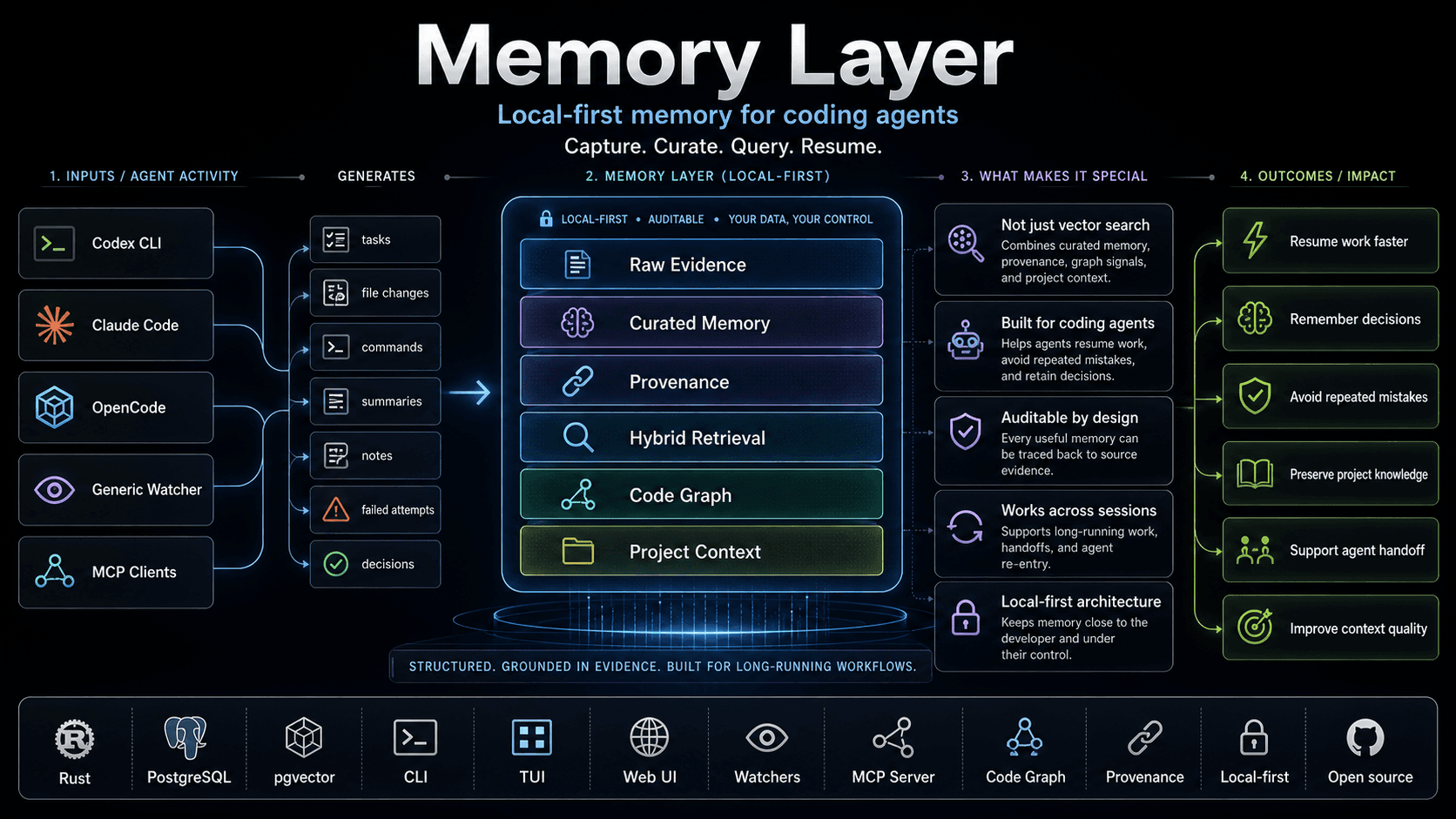
Memory Layer
Local-first memory for coding agents.
Memory Layer turns project work into durable, searchable knowledge so the next Codex, Claude, MCP client, or human session starts with evidence instead of guesswork.
Install Memory Layer, configure storage, and initialise your first project.
Use Memory Layer from Codex CLI, Claude Code, generic agents, or MCP-capable clients.
Measure memory impact with paired no-memory versus full-memory ablations.
What is Memory Layer?
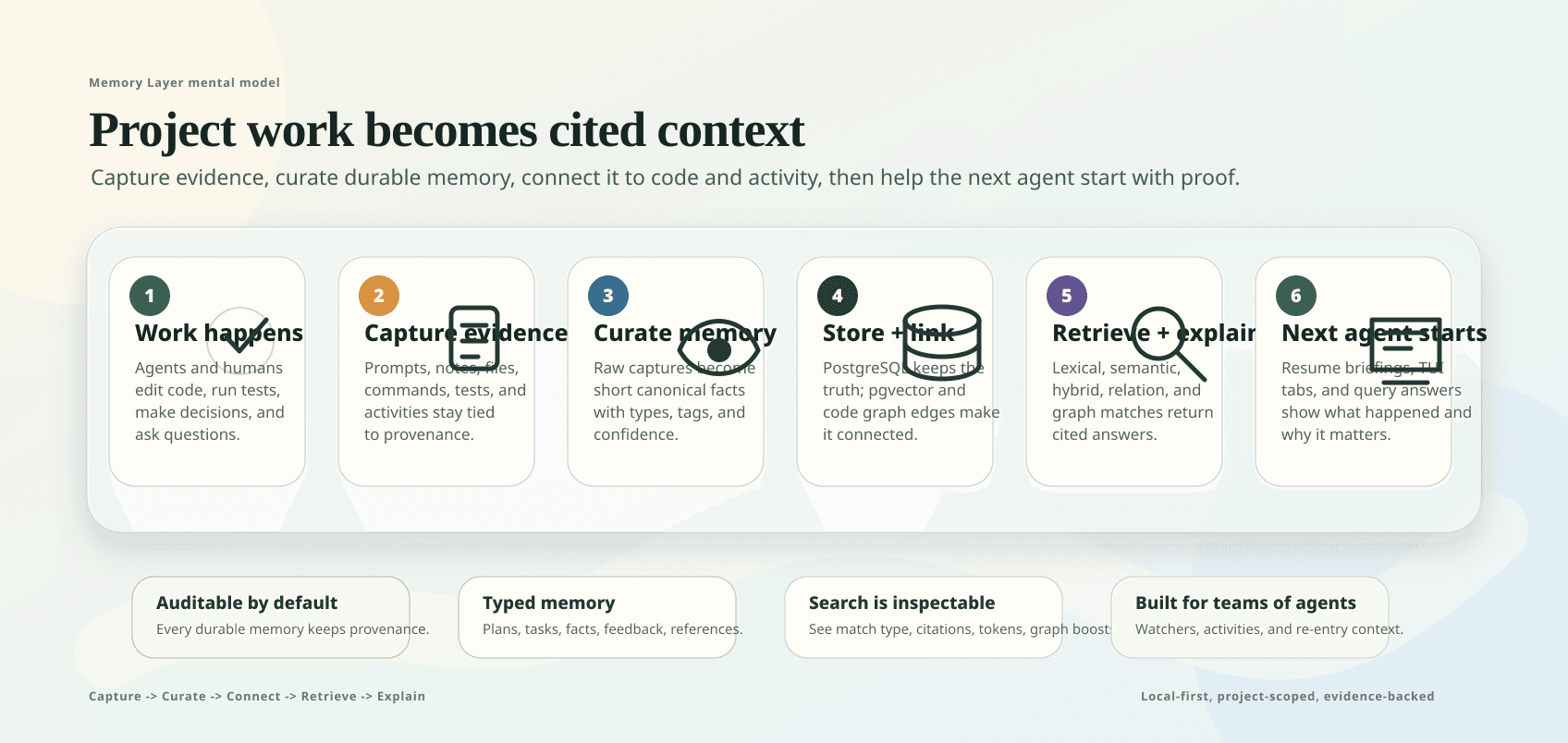
Memory Layer captures what happened, curates what matters, stores it with evidence, and retrieves it when future work needs context. It is not just a note-taking tool or a vector database wrapper. It is memory infrastructure for agentic software work.
Why it matters
Coding agents lose context between sessions. READMEs rarely capture the messy why. Chat histories are hard to search and hard to trust. Memory Layer helps projects reduce rediscovery, preserve decisions, and make memory measurable without promising perfect recall.
Key capabilities
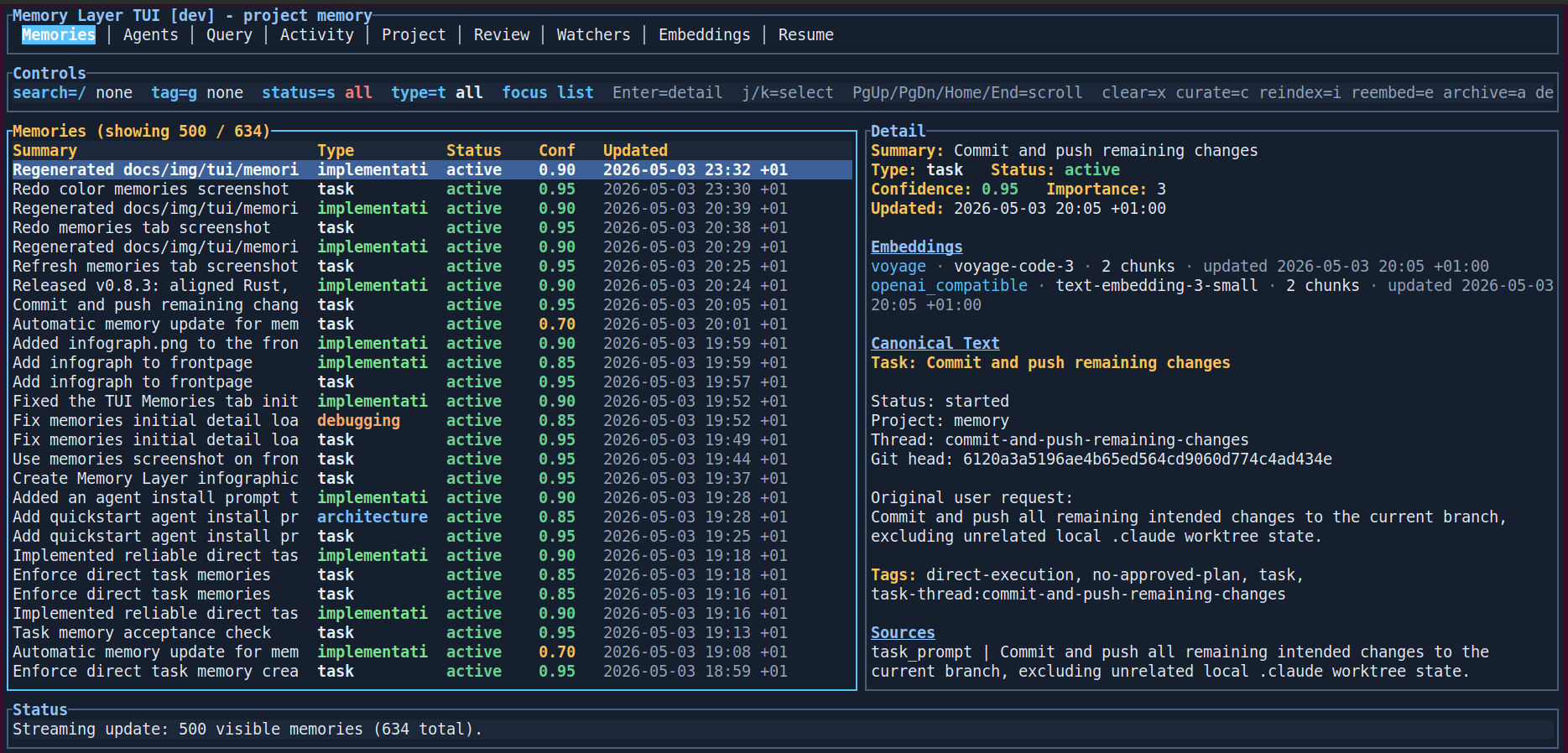
Ask a project question and inspect the ranked memories, citations, graph hints, and diagnostics behind the answer.
Expose memory through CLI commands, the TUI, browser UI, and read-first MCP tools.
Attach to Codex and Claude sessions, monitor token pressure, and capture useful activity.
Connect memories to files, symbols, references, and graph relationships.
Review replacement proposals before older knowledge is superseded.
Run paired ablations and inspect success, recall, ranking, token, and latency metrics.
Quick start
memory wizard --global
cd /path/to/project
memory wizard --dry-run
memory wizard
memory doctor
memory health
memory tui
Built to be measured
Memory Layer includes an evaluation harness for paired ablations such as no-memory versus full-memory. It records immutable artifacts, compares item-by-item results, reports retrieval quality, and tracks token and latency cost.